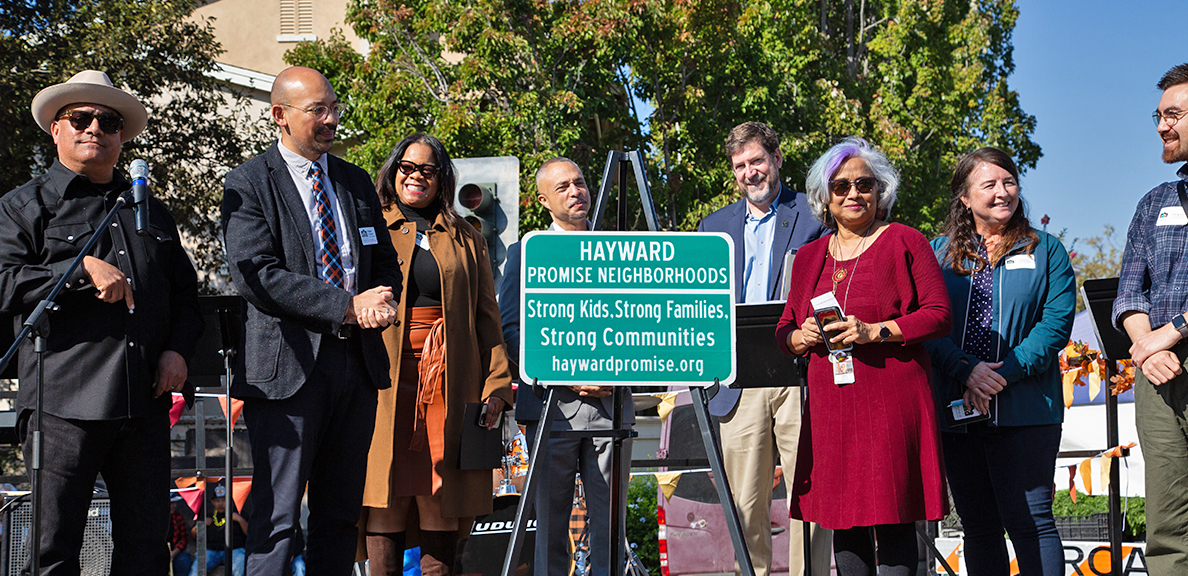
Hayward Built Something Extraordinary. Then Everything Changed.
BY Ben Soriano
November 20, 2026
For fifteen years, a public university and its community partners found ways to turn educational opportunities into lasting progress for thousands of families. Their success attracted attention across the country. Then, just as the results were growing stronger, an unexpected federal decision threatened the work they had built.
The first thing Mario Alfaro did was call his parents.
Deloitte, one of the world's largest accounting and professional-services firms, had offered him a tax internship in San Francisco paying $44 an hour. For a young man from Hayward whose father spent his days demolishing buildings and removing hazardous materials, the figure was almost incomprehensible.
“Wow, that's more than I get paid,” his father told him.
Mario's parents had immigrated from Michoacán, Mexico. His father removed asbestos and lead from buildings. His mother cleaned airplanes. Their son had once missed so much school amid family upheaval that he ended up in truancy court. But Mario returned, recovered his credits, graduated a year early and enrolled at Chabot College.
Today, he has a full-time job offer beginning in 2027, with a starting salary just shy of $100,000—placing him in the top fifth of recent college graduates nationwide and in the same earnings tier as graduates of the nation's most elite universities.
Across Hayward, another young person was making an equally remarkable journey, this one leading back to the very school where it began.
Spozhmey Munir arrived from Afghanistan at seventeen. She entered Tennyson High School with strong academic preparation but little understanding of American education. Financial aid was a mystery. So were the steps for a student to attend college.
Her persistence led to the answers she needed. She graduated and enrolled at California State University, East Bay. Then she returned to Tennyson, this time helping newly arrived Afghan girls navigate the same unfamiliar world.
Some had never used a computer. Others needed someone who spoke their languages and could explain college applications to their parents. Spozhmey understood both the paperwork and the fear of getting something wrong.
“I became the person I didn't have,” she said.
She estimates that approximately 20 to 25 Afghan girls she assisted are now attending college. One is studying nursing.
Mario and Spozhmey had traveled very different roads. Yet both returned to Hayward with something valuable: knowledge that could make another person's journey easier.
Their stories are part of a fifteen-year undertaking called Hayward Promise Neighborhoods, or HPN, whose achievements reach far beyond these two young people.
Since 2018, HPN reports a 32 percent increase in Hayward Unified students enrolling at or transferring to Cal State East Bay. Equally stunning is the graduation rate. In three short years between 2023-2026, the number of students per class who experienced that proud moment of hearing their name, ascending the stage with smiles and gowns, and accepting their diploma rose from 64% to 82%.
HPN’s partners added more than 190 preschool spaces and over 600 career-technical-education enrollments since 2012. In Downtown Hayward alone, HPN provided direct services to 2,000 children and 3,800 adults annually.
In 2026 legislative testimony, Edgar Chávez, HPN’s executive director, reported that chronic absenteeism had fallen by more than 25 percent and that the network, co-led with Hayward Unified, was seeing some of its strongest results in fifteen years.
The figures tell of progress. The story behind them is about what happens when a community gets the support to take care of its own future.
The connections that changed everything
Hayward Promise Neighborhoods began taking shape in 2010, with Cal State East Bay at its center. Supported by successive grants from the U.S. Department of Education, the university brought together schools, child-care specialists, nonprofits, health providers and public agencies that had long served many of the same families.
The idea was simple enough to sound obvious. Children's lives don't divide neatly into the responsibilities of separate institutions.
A child struggling to read may also lack stable housing. A parent may need child care before keeping a job. A teenager capable of attending college may have nobody at home who understands financial aid.
Yet the agencies responsible for those needs often operate independently, each with its own rules, budgets and eligibility requirements.
HPN brought them into a shared effort, connecting assistance from infancy through school, college and employment. Educators call it cradle-to-career support.
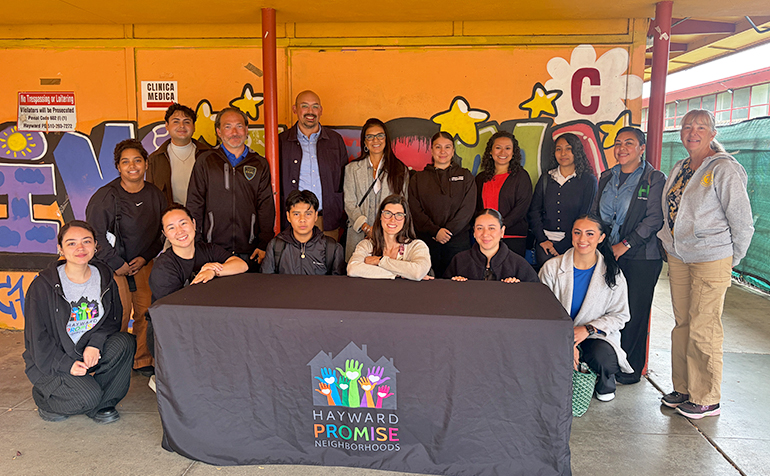
At its fullest reach, the network spanned eleven schools and roughly fifty funded programs, with approximately ninety connected employees and interns.
Cal State East Bay led the collaboration, while the CSU East Bay Foundation served as the federal grant's legal recipient and fiscal administrator. The university supplied the budgets, contracts, oversight and coordination that allowed independent organizations to work together.
But the most interesting connections were often human.
The path that led Mario to Deloitte and Deloitte to Mario began when he chose Chabot College to change his life. Counselors in TRIO, a separate federally supported college-access program, helped him navigate transfer requirements. He later worked for TRIO Educational Talent Search, helping Hayward high-school students apply to college. After transferring to Cal State East Bay, he joined HPN, which connected him with the Bay Area K-16 Collective where he secured his internship and earned his job.
Spozhmey met HPN staff through College Corps, a separate California student-service program. Recognizing her effectiveness with newly arrived students, HPN hired her and later supported the Afghan mentorship initiative she conceived and led.
Both brought something no handbook could supply: the credibility of having lived through the challenges facing the students they served.
The same philosophy extended to families with much younger children.
The Community Child Care Council of Alameda County, known as 4Cs, had been helping parents find and afford child care since 1972. A founding HPN partner, it brought decades of expertise in early learning, parenting education and family services. A former executive director helped shape HPN's original plan.
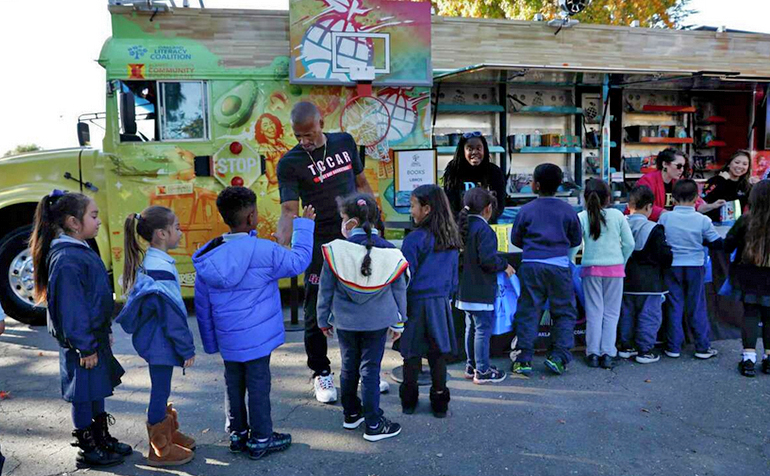
Through HPN, 4Cs led an Early Learning Network connecting child-care providers, schools and agencies serving children from birth through age eight.
A parent might first meet 4Cs at a toddler playgroup, receive a home visit or developmental screening, then turn to a family navigator for help with food, health care or kindergarten preparation. The relationship could continue as the child grew.
“What HPN allowed us to do was just reach so many more families, and provide a deeper layer of that family navigation,” said Barbara Johnck, 4Cs' director of community services.
From 2018 through 2022, Johnck reported, Family Navigation served approximately 293 families and 414 children, making nearly 2,800 referrals.
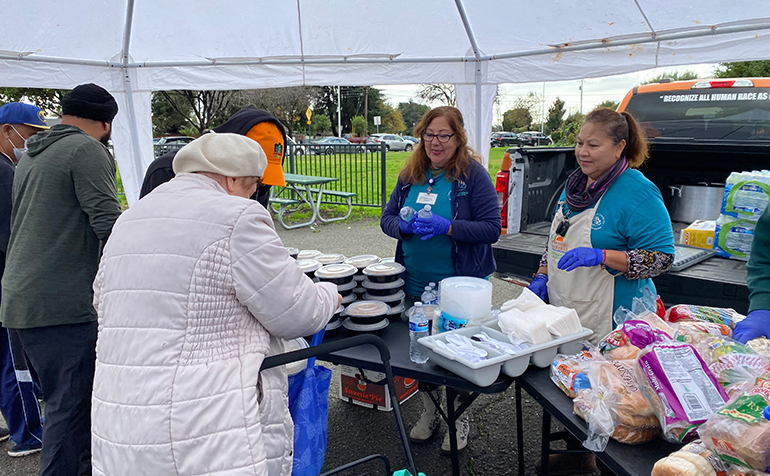
When the pandemic arrived, those established relationships became lifelines. Families turned to familiar staff for groceries, rent assistance, diapers and other necessities.
Over fifteen years, HPN has helped form something resembling a protective membrane around families, allowing assistance, information and trusted relationships to move among organizations without requiring parents to navigate every connection themselves.
Building that kind of trust takes time.
On December 11, 2025, time suddenly became the one thing HPN no longer had.
The letter
The notice came from the U.S. Department of Education: HPN's five-year grant would not continue through its final two years.
The Downtown Hayward initiative had received a $30 million award in 2022, with $6 million scheduled annually from 2023 through 2027. Its application had tied for the highest score in the federal competition. Partners had hired employees, developed services and organized their work around that commitment.
Now, in the third year, at least $12 million in expected funding was disappearing.
HPN had days to respond. Final cancellation arrived before the new year. Federal spending stopped January 1, followed by a ninety-day closeout.
According to Chávez, federal officials cited specific language contained in the grant that ran counter to the new administration’s policies as grounds for the decision. HPN’s efforts to save the funds was one of hundreds of organizations across the country impacted by these policy changes.
The consequences reached into the network almost immediately.
HPN's central coordinating team fell from roughly a dozen people to five. Its directly controlled annual budget dropped by approximately $1.8 million to around $900,000–$1 million, with further reductions anticipated.
Fifteen years of relationships and accumulated knowledge had produced a model whose leaders traveled across the country to share what Hayward had learned. The network was reporting some of its strongest educational results.
Now the people who maintained those connections were trying to determine what could survive in the coming weeks.
The grant ended. The needs it had been designed to address did not.
What disappears between the doors
For 4Cs, the cut did not mean closing its doors. The organization had survived more than half a century and would continue serving Alameda County families.
But the reach it had developed through HPN was badly diminished.
Three of its four HPN team members remained. Child-care assistance and selected family programs continued. Yet home visits, parenting programs and navigation became more limited. Coordination among preschool providers and elementary schools weakened. Help that once followed families through changing circumstances became restricted to narrower eligibility requirements.
“Coordination, connection, working together to really support the families—that's been a big impact of losing the funding,” Johnck said.
For 4Cs Chief Executive Officer Takija Gardner, the loss extended beyond individual services. HPN had helped early-childhood providers and elementary schools coordinate their work, share practices and prepare children for kindergarten. Without that support, the connections became harder to maintain.
“That's a big missing piece at the moment,” Gardner said.
A family might still find food assistance, developmental screening or child-care referrals. But without the people connecting those services, more of the responsibility for navigating them returned to parents.
Katie Honegger, 4Cs' director of development and communications, remembered what years of working with Hayward families had created.
“They really became, over the years, part of the fabric of our community, and we became a fabric of their community.”
She was describing something built through repeated encounters: a playgroup, a home visit, help during a difficult month, another conversation when a child entered school.
Families knew whom to call. Staff knew their histories.
That kind of trust cannot simply be replaced with a referral list.
For Chávez, the loss was personal in another way.
He grew up in Cherryland, the unincorporated community neighboring Hayward, attended San Lorenzo Unified schools and graduated from Stanford University. He later bought a home in Cherryland near his parents and still lives there.
Like Mario and Spozhmey, he had found his way into higher education and brought his experience back to the community that raised him.
Since becoming HPN's executive director in 2020, he had helped sustain an organization that had spent fifteen years helping families find their way through complicated systems. Today he is determined to make sure those families know HPN is still there for them.
The unfinished promise
Mario remembers looking at his full-time job offer and thinking about his parents.
“It's more money than my parents ever made in their life, man. That's absurd to me, really.”
His father had once taken him along for a summer of demolition and hazardous-material removal, urging him to pursue a different future. Mario had already chosen college, but the experience reinforced what was at stake.
Spozhmey, meanwhile, has graduated from Cal State East Bay, works as a medical assistant and is preparing for the MCAT, the examination used for admission to medical school. Young women she helped are pursuing college degrees of their own.
Neither achievement belongs to HPN alone. What the collaboration recognized was that the knowledge people gained along the way could become an opportunity for someone else.
That principle is what Chávez is trying to preserve.
HPN still has staff, student interns, experienced partners and programs serving families. Cal State East Bay remains its institutional center. The people who spent years learning how to coordinate services have not forgotten what they learned.
But preserving those connections requires resources.
For 2027–28, Chávez estimates approximately $1.192 million is needed to sustain the existing team and programs, with additional funding required to restore outreach and support collaboration among partners. His plan is to combine public resources, philanthropy and community support into a more durable financial foundation.
A gift can help retain the navigators who know families, the student mentors who understand their neighborhoods and the coordinators who allow separate organizations to work together.
Mario is preparing to begin a career his parents could scarcely have imagined. Spozhmey is studying for the MCAT, while young women she once helped are making their way through college. Both have already spent years helping other Hayward students find their footing.
Chávez and his colleagues are trying to make sure that kind of help remains available.
The money they need has not yet been raised. But children are growing up, parents are struggling and high-school seniors are making decisions about college right now. None of them can wait for the rebuilding to be finished.
Somewhere in Hayward, another Mario may be wondering whether it's worth going back to school. Another Spozhmey may be trying to make sense of a financial-aid application in a language she is still learning.
For fifteen years, Cal State East Bay, founding partner 4Cs and the people behind Hayward Promise Neighborhoods have built something worth fighting for. The funding may have vanished, but their resolve hasn't. Neither has their belief in the families they serve.
They've come too far to stop now.
Chávez knows the climb ahead is steep. But he's spent his life finding ways forward when the odds were long.
“I have a plan,” he said, and smiled.
You can make a gift to continue the services and support that impact students like Mario and Spozhmey. Be a part of Giving Tuesday, the global day of philanthropy and make your gift here:
Giving Tuesday

Share this story