Analytics and Advising Initiatives
-
STUDENT ADVISING EXPERIENCES 2021
View Academic Advising Survey Summary
A collaborative, cross-functional team of faculty and staff will focus on this year’s topic, student advising experiences at Cal State East Bay. Recent data from fall 2020 indicate that 27% of students who departed East Bay did not speak with anyone in the campus community about their decision to leave, and 20% of students cited difficulties with their academic advising as a major factor in their decision to not return. The 2021 Data & Action team will engage in a data-driven research process by analyzing results from Cal State East Bay Advising survey results and developing an action plan to enrich advising practices designed to counteract student departure. Outcomes for this year's project are to:
- Explore institutional and survey data to understand student success trends at Cal State East Bay.
- Analyze assessment results related to student experiences with academic advising.
- Integrate equity-minded student success frameworks into student advising practices.
- Develop an action plan to strengthen student advising practices on campus.
- Collaborate across divisions to strengthen institutional commitment to student success.
Team MembersLuz Calvo, Faculty/Chair, Faculty Lead of GANAS Program
Kevin Gin, Senior Strategic Partner, Institutional Effectiveness & Research
Paul Carpenter, Professor/Department Chair, Kinesiology
Christina Chin-Newman, Professor, Human Development & Women's Studies
Shannon Coskran, PACE Counselor and Coordinator
Saleem Gilmore, Director, EOP
Shonda Goward, Director, Student Center for Academic Achievement
Bill Irwin, Student Success Specialist, Academic Programs & Services
Jennifer Luna, Director, Recreation & Student Wellbeing
Cherie Randolph, Veterans Retention Program Coordinator
Thomas Tyner, Executive Director, University Extension
-
-
Pioneer Pathway - Student Perspectives
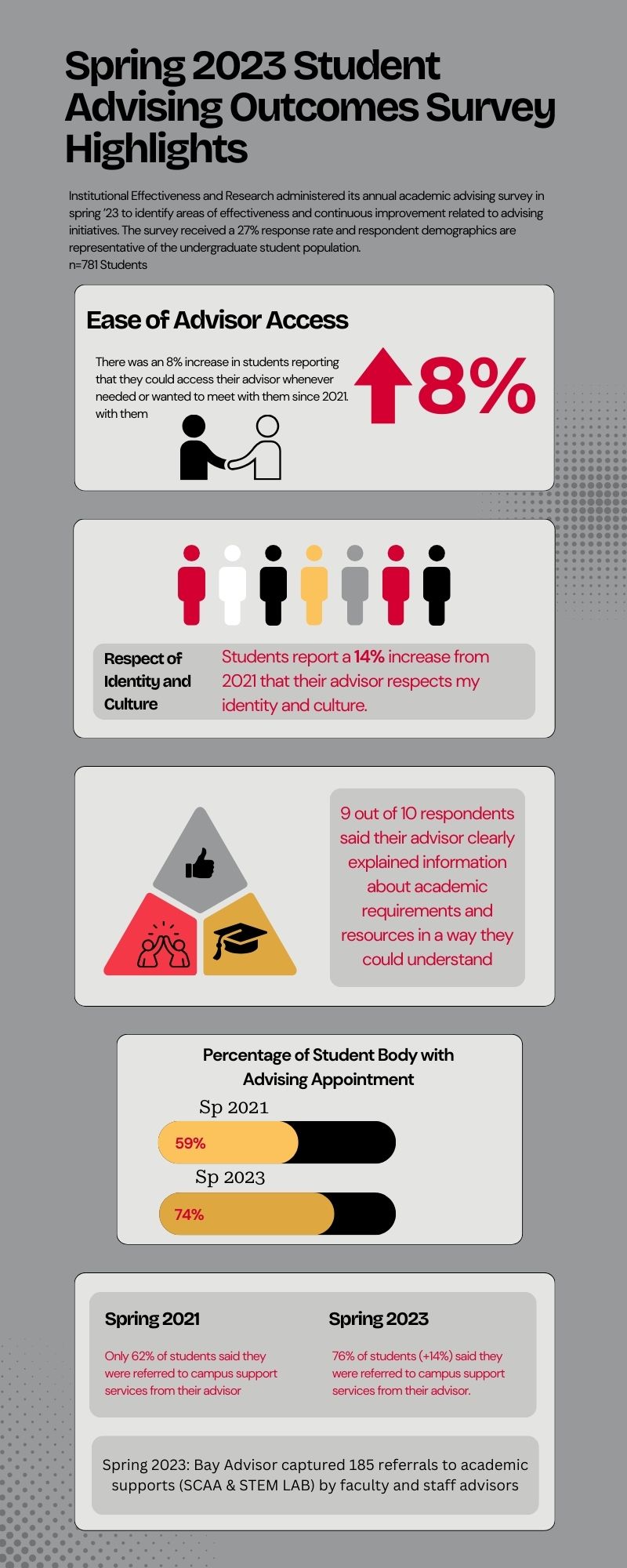
During spring 2021, Cal State East Bay administered an online advising survey to all enrolled undergraduate students to learn more about their experiences with academic advising. In all, 2,943 students participated, a response rate 24.1% in this voluntary survey over three weeks.

Underrepresented minority students are...
- More likely to utilize Cal State East Bay Students as a primary source of information
- Less likely to get referrals to accessibility services and counseling from major advisors.
Low income students are more likely to...
- Appreciate support to understand why required courses are important for their academic program.
- Find information about University Policies and Requirements useful.
SEAS participants are more likely to report that...
- Academic support is useful (e.g., improving studying skills, referrals to tutoring, accessibility and counseling).
- Counselors have been available when needed
- Counselors respect their identity, culture and well-being
Traditional college students are more likely to utilize...
- Faculty in their major/department
- the College Advising Center
- the General Studies faculty
- their Pioneer Success Coach advisor
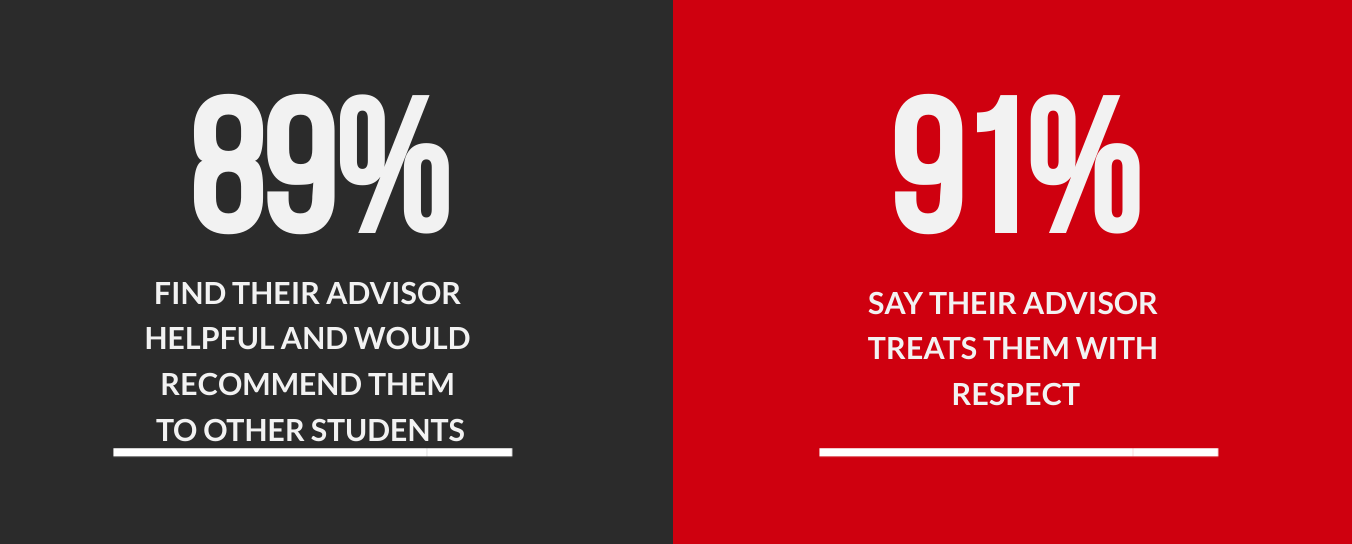
How do students feel about their advising experience?
At the end of the survey, space was provided for the students to write additional comments. There were a mix of both challenging experiences and positive comments.
"I really appreciate the GE advisors I have communicated with throughout my experience at East Bay so far. They are very hands on and determined to answer any questions and help you succeed."
What we can do to improve our advising experience?
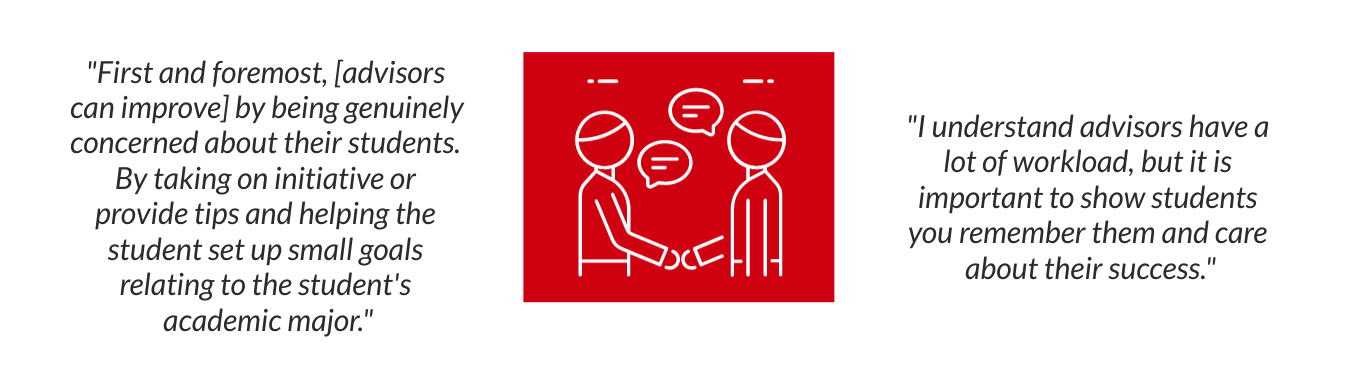
SHOWING THAT WE CARE
Students want more assurance that advisors see them as a person and are invested in their success. Social-emotional awareness often brought up the survey.
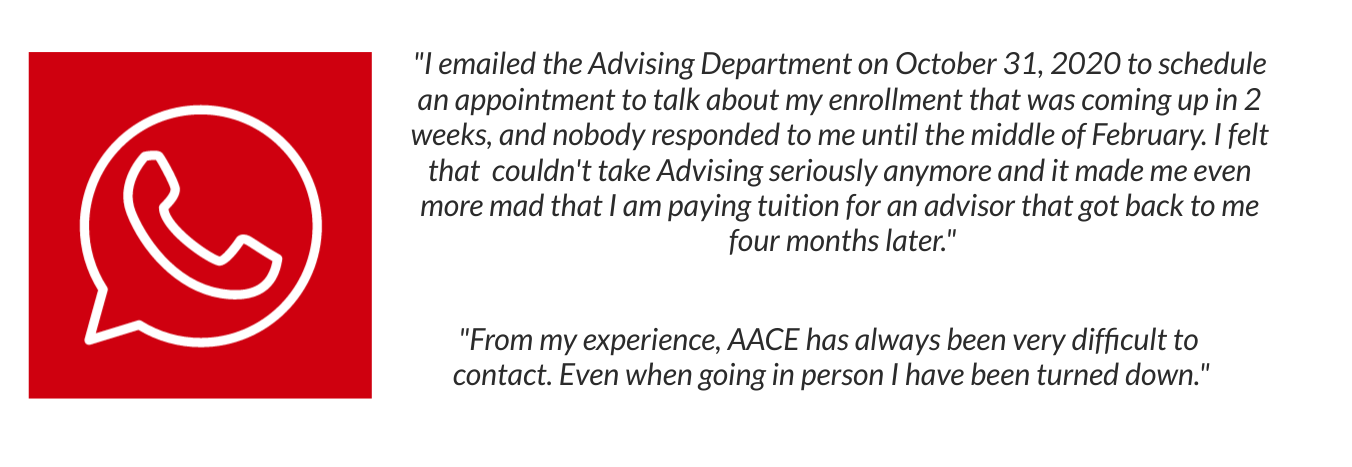
Being more accessible
Students expressed more concerns advisor accessibility. Many students experienced difficulty in getting in contact or scheduling appointments with an advisor.
 Reflecting on our knowledge and trainings
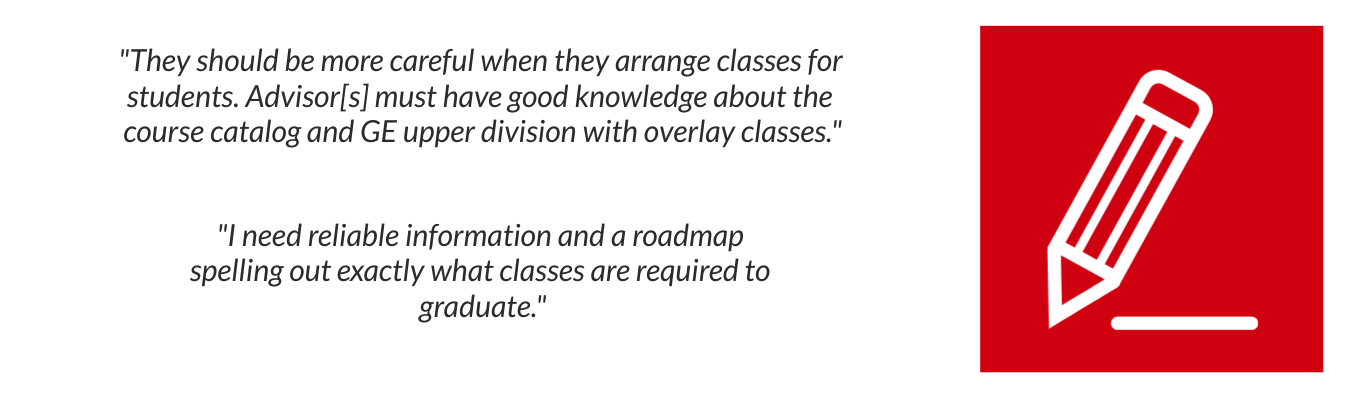
Students expressed that more time and attention should be given to ensuring that the information advisors are sharing is accurate.
-
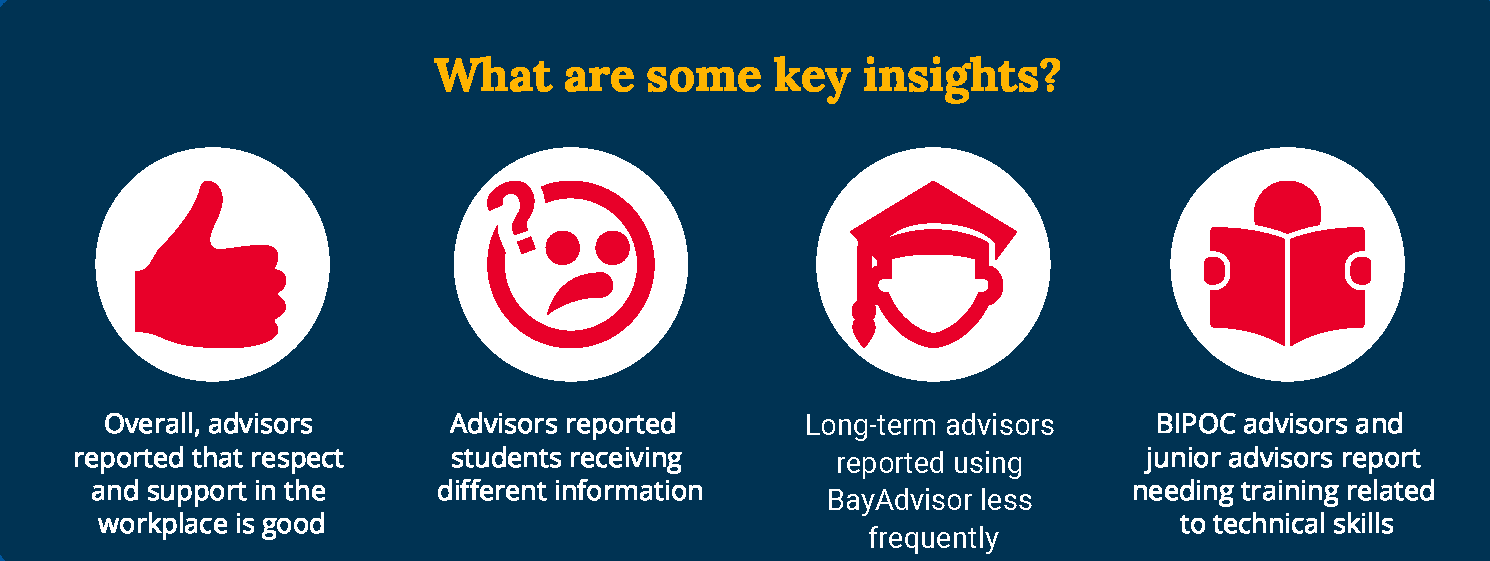
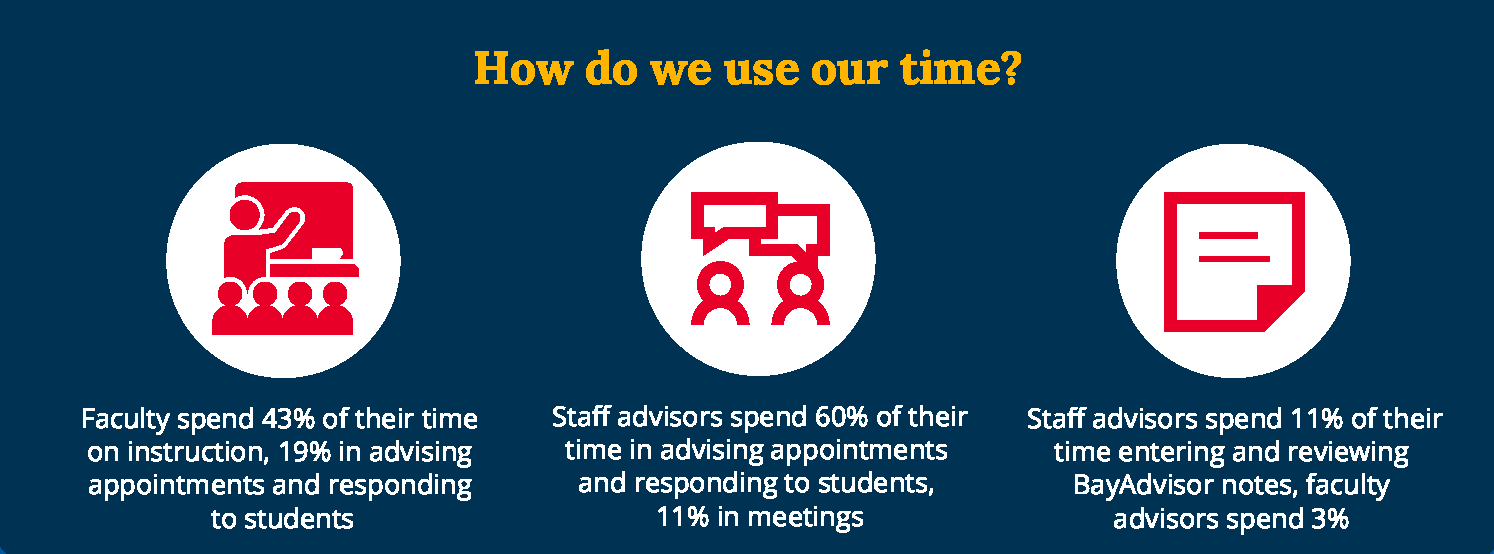
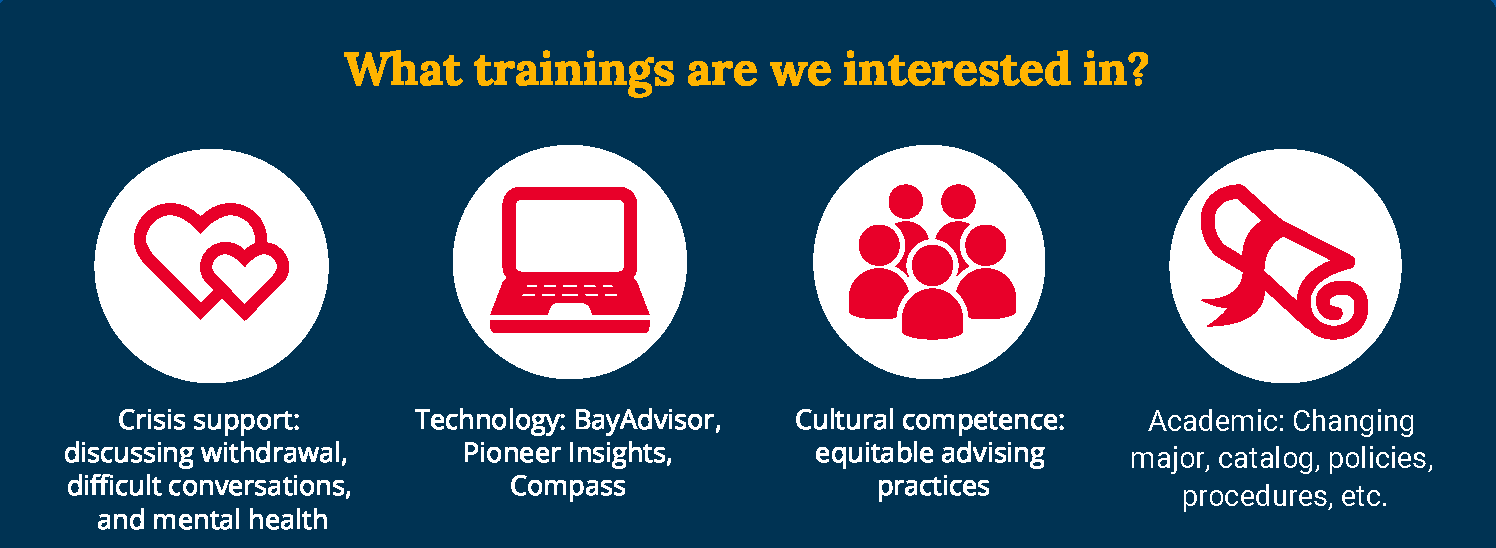
Pioneer Pathways: Academic Advisor Spring 2021 Survey
The survey was sent in Spring 2021 via email to the Academic Advisors listserv. Advisors were invited to take part in the survey anonymously. The survey was hosted by the office of Institutional Effectiveness and Research on the Qualtrics platform. There were 90 recorded responses of 355 individuals who received the survey. This represents a response rate of 25%.