Fire Dendrochronology
Fire Dendrochronology Explained
 Read More about Tree Rings, Dates, and Dendrochronology
Tree Rings, Dates, and Dendrochronology
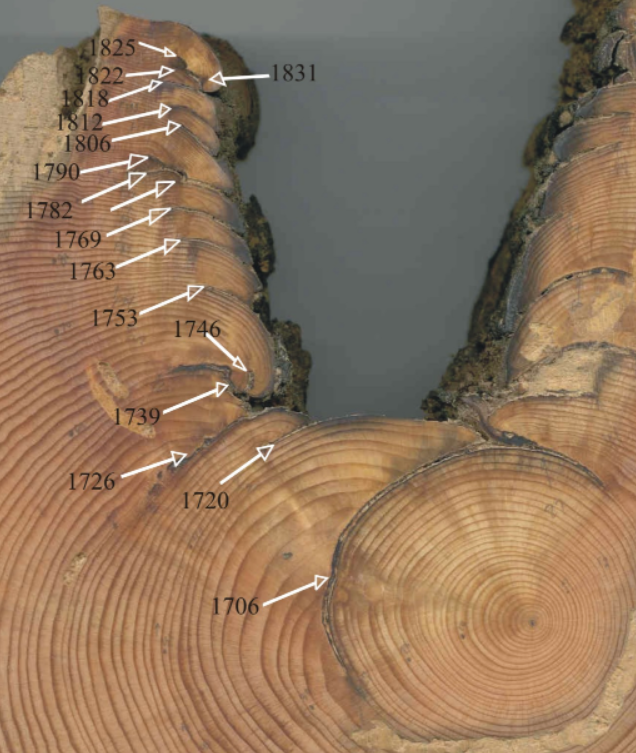
Every year, a tree adds a new layer of growth, forming a visible ring in its trunk. These rings change in thickness depending on the climate—wide rings grow in wet, favorable years, and thin rings form in dry or difficult years. By counting and comparing these rings across many trees, scientists can create long, continuous timelines of past environmental conditions.
Dendrochronology is the science of using tree rings to determine the age of wood and to study past climates. It allows researchers to date wooden objects with remarkable accuracy and to understand how temperature, rainfall, fires, and other natural events shaped the landscape over hundreds or even thousands of years.
 Read More about Cultural and Ecological Benefit
Cultural and Ecological Benefit
 Read More about Creating Room for Crafting Material
Creating Room for Crafting Material
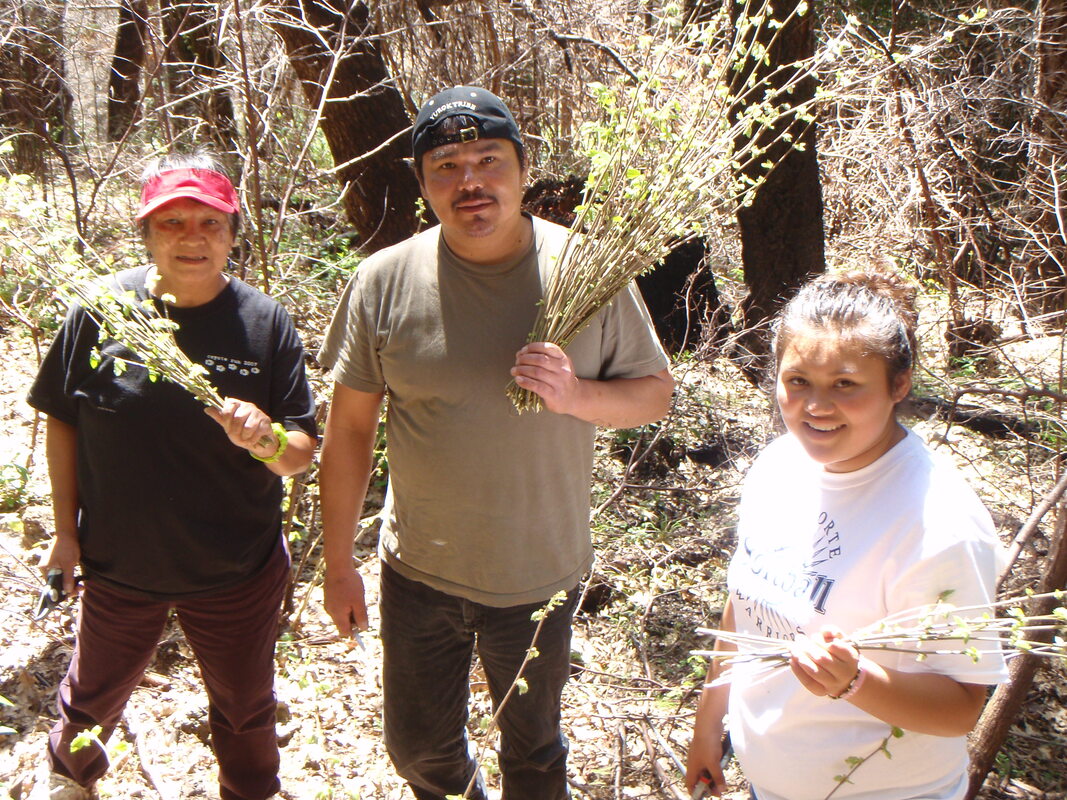
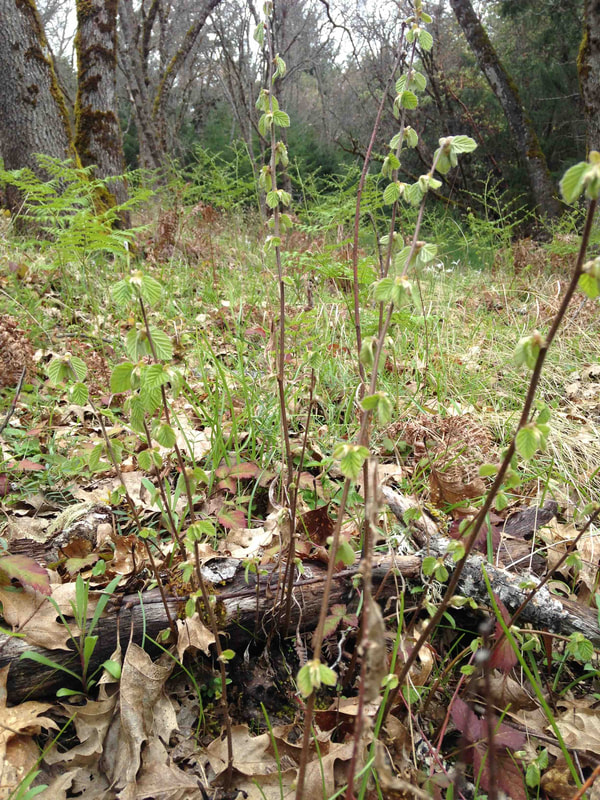
When many shrubs are burned, they re-sprout and produce straight, unbranched stems. These stems are great for weaving baskets, which are used for many purposes, such as for food gathering, carrying, processing, cooking, and serving food. Other uses include baby cradles, storage, fish-and-bird traps, and ceremonial purposes (caps and regalia).
California hazelnut (Corylus cornuta var. californica) is one example of a species Indigenous peoples burned for basketry. The hazelnut shrub in this photo has straight stems ready for gathering, one year after they were burned on the Yurok reservation in Northern California.
 Read More about Clearing Land for Visibility and Ease of Travel
Clearing Land for Visibility and Ease of Travel
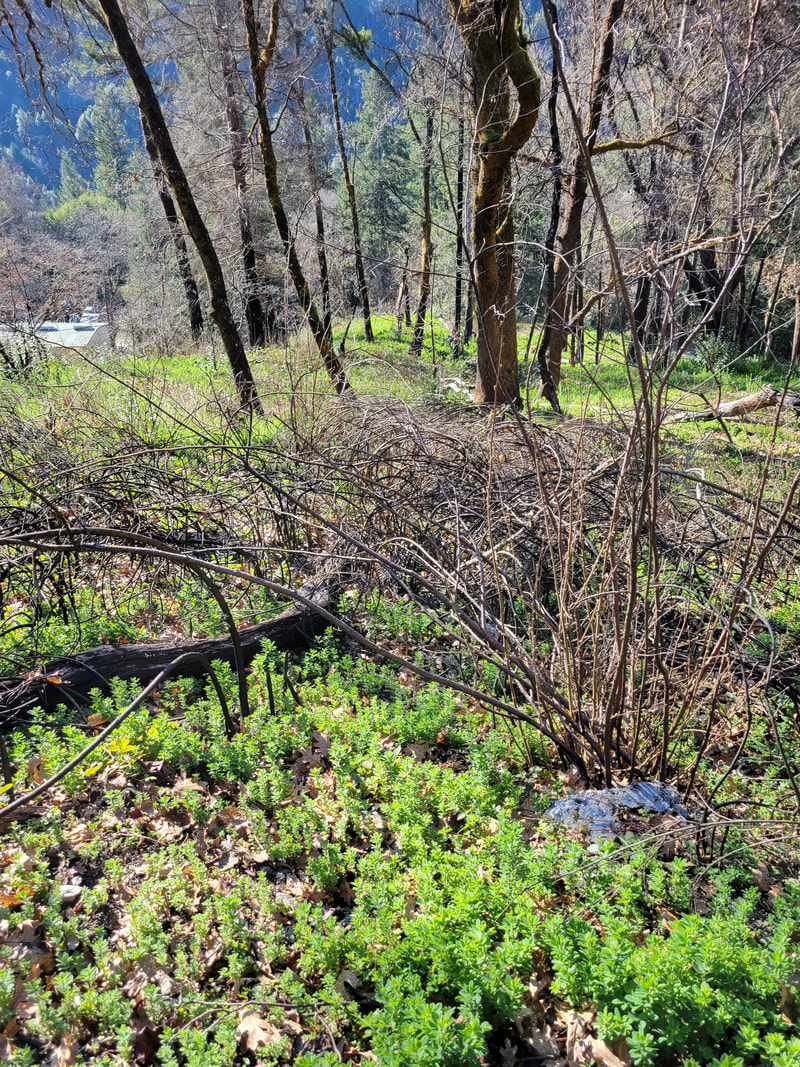
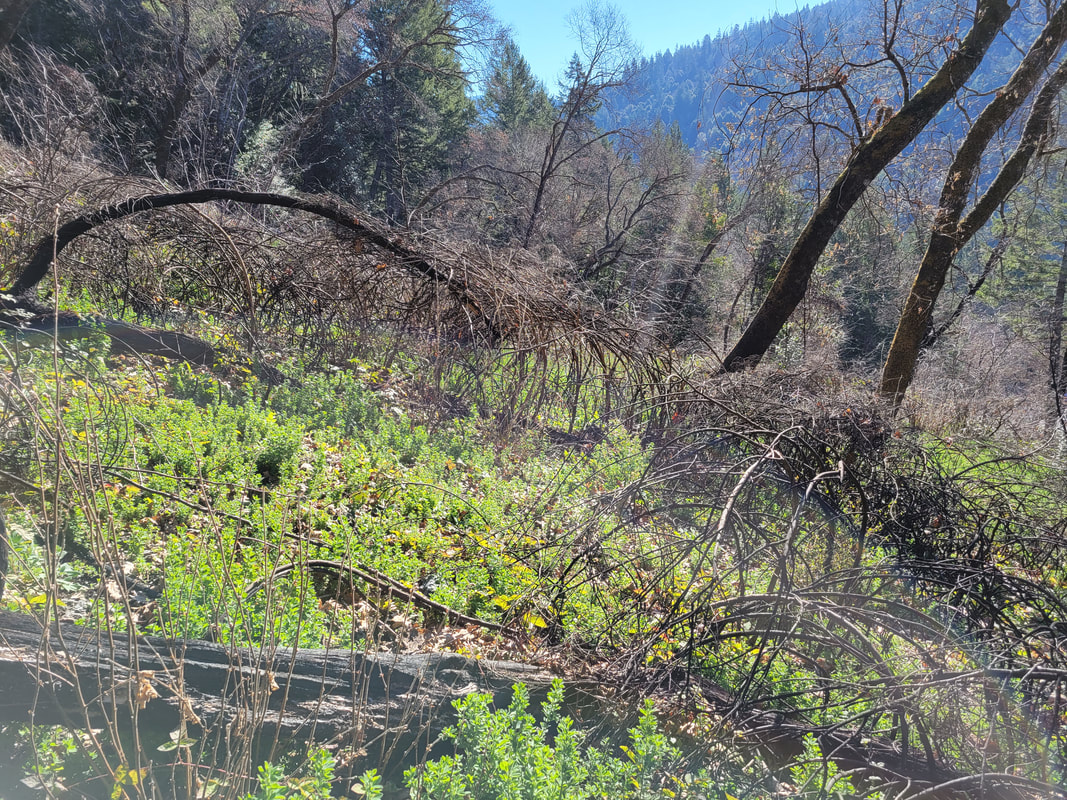
In areas where fire has been excluded, dense living and dead woody vegetation accumulates. These areas are fuel for uncontrallable fires, invite vermin, and make hunting difficult. Prescribed fires help clear undergrowth allowing Indigenous peoples to access resources with ease.
 Read More about Replenish of Native Wildflowers
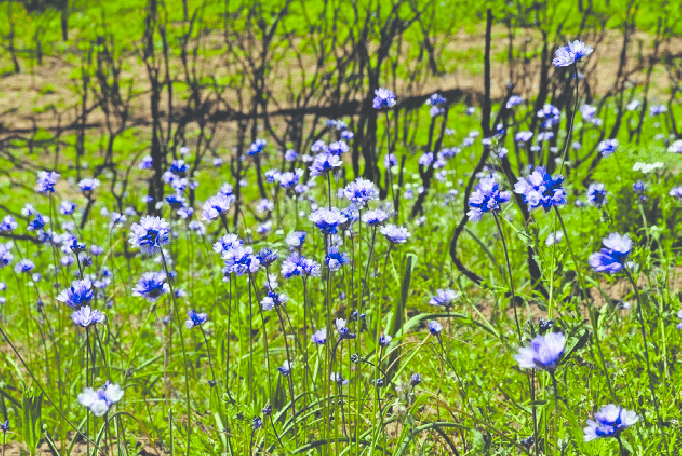
Replenish of Native Wildflowers